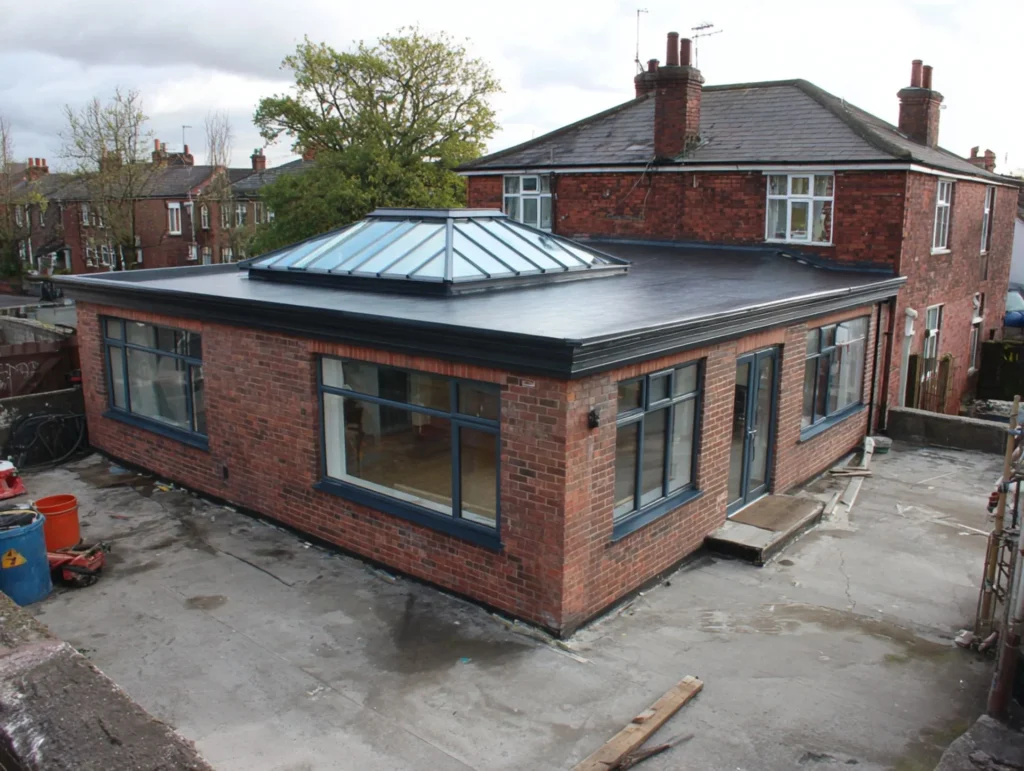
Flat roofs are a common sight across Liverpool and the wider Merseyside area, especially in extensions, garages, bay roofs and modern dormers. When they’re working properly, they’re low-profile and reliable. When they fail, the stress kicks in fast: stains on the ceiling, bubbling plaster, dripping around a light fitting, or water finding its way into a loft conversion.
This helpful article tells you how roofers and builders fix EPDM rubber roofs, what usually goes wrong in our area, and when it’s better to fix something than to replace it.
What Is EPDM Rubber Roofing?
EPDM (Ethylene Propylene Diene Monomer) uses a synthetic rubber membrane that roofers often install on flat roofs, garage roofs, extensions, and shed roofs. It’s popular because it resists UV rays, temperature extremes, and general wear better than traditional felt. When properly fitted, EPDM sheets can last over 25 years.
At Roofer and Builder, we often tell Liverpool homeowners who want a long-lasting, waterproof, and low-maintenance roofing system to get EPDM. In this area, older felt roofs tend to crack and leak over time, so this is the perfect solution.
Why EPDM Flat Roofs Fail in Liverpool Conditions
Most EPDM problems are not caused by the material being “bad.” They’re usually down to details, ageing, or the way the roof handles water.
Here are the most common issues we see around Liverpool, Wirral and across Merseyside:
- Poor installation: Seams or edges not correctly sealed during EPDM installation can lift or split later.
- Ponding water: Flat roofs that aren’t properly levelled may hold standing water, slowly degrading the membrane.
- UV and weather damage: Over the years of exposure, Liverpool’s mix of sunshine, rain, and storms can cause surface hardening or cracks.
- Blocked gutters and moss growth: Overflowing gutters and debris keep moisture trapped on the surface.
- Foot traffic or impact damage: Walking across the roof or placing equipment such as aerials can puncture the material.
- Detailing around upstands and flashings: where the roof meets wall abutments, door thresholds, leadwork or flashings, small defects can let water track in.
Early Warning Signs Your EPDM Roof Needs Attention
If you spot these early, you can often avoid a bigger roof leak repair Liverpool job later:
- Look for watermarks on ceilings or around window reveals, especially near an extension.
- Drips that appear after wind-driven rain, not necessarily after light showers
- Lifting edges, loose trims, or corners that look pulled tight
- Cracks or splits around outlets, pipes, skylight kerbs or wall junctions
- Puddles that remain on the roof long after the rain stops
- Moss build-up and overflowing gutters near the flat roof edge
A quick note: water can travel. The leak point is not always directly above the stain, which is why a proper inspection matters.
Common EPDM Repair Types and When They’re Appropriate
There’s no one-size-fits-all fix. Below are repair types we commonly use, and when each is suitable:
- Seam or joint patching: best for small splits, failed joins, or localised damage where the surrounding membrane is still sound.
- Edge and perimeter repairs: for lifting edges, weak corners, or damaged trims where wind has started to get underneath.
- Outlet and gutter interface repair: when leaks track in around drains, outlets, or where water backs up due to blockages.
- Targeted overlay solutions: In some cases, a compatible overlay can work, but only if moisture is not trapped and the roof build-up is suitable.
- Liquid-applied repairs: A liquid rubber or compatible roof coating can be useful for certain details and awkward shapes, but it is not a magic paint-on fix for a failing roof. We only recommend it where it genuinely suits the substrate and detailing.
You might see “quick fixes” online, like a kit for repairing roof leaks. These can work for a short while on a dry day, but they usually don’t work if the surface is wet, dirty, or moving. If you put incompatible products on top of the issue area, it can also make it difficult for professionals to fix it later.
What to Do When You Spot a Leak on an EPDM Flat Roof
Leaks can appear suddenly, especially after storms or freeze-thaw cycles. Here’s what to do:
- Stay safe: Avoid climbing on the roof during hazardous weather.
- Contain the leak indoors: Use buckets or plastic sheeting to protect electrics.
- Call professional help: A team offering emergency roof repairs across Merseyside can inspect, make safe, and apply temporary protection quickly.
- Arrange follow-up inspection: Once conditions allow, have the full roofing system checked to identify the root cause.
At Roofer and Builder, we often provide temporary fixes first, for example, sealing damaged sections or applying a waterproof cover, then return for a full repair or renewal.
Repair or Replace: How to Make the Right Call
Generally, replacing your flat roof is more cost-effective if the damage exceeds 25–30%.
A repair is often the sensible option when:
- The membrane is generally in excellent condition with isolated damage.
- The leak is traced to a specific detail (outlet, seam, edge, flashing).
- There’s no widespread shrinkage, cracking, or multiple failing areas.
A replacement is usually smarter when:
- Leaks keep returning in different spots.
- The roof has persistent ponding water due to poor falls.
- There are multiple previous patches, and the membrane is tired overall.
- The roof deck or insulation is water-damaged (repairs on top will not solve the root problem).
A professional inspection will confirm whether you can repair your EPDM with a leak repair kit or whether you should opt for a full EPDM reinstallation for a safer long-term result.
How EPDM Rubber Roof Repairs Are Properly Carried Out
A reliable EPDM repair is about preparation and compatibility, not just sticking something on.
A proper approach typically includes:
- Inspection: Assess the membrane, seams, and substrate for moisture.
- Cleaning: Remove moss, dirt, and old adhesive using safe cleaning agents.
- Preparation: Dry the area thoroughly to ensure new materials bond properly.
- Repair: Use compatible EPDM patches or liquid rubber coatings to seal cracks or punctures.
- Test and finish: Once cured, inspect for watertightness and reseal edges for durability.
If we find related issues nearby, such as slipped tiles above a flat roof junction or failing ridge pointing, we’ll flag it. We provide coverage for both flat roofs and tile and slate roofing, ensuring we don’t overlook issues at the crossover points.
The Role of Liverpool’s Weather in Roof Maintenance
Liverpool and Merseyside roofs have to deal with a unique mix of weather: pounding rain from the Irish Sea, abrupt storms, and long periods of dampness that support moss growth. Blocked gutters and ancient building elements can put a lot of stress on flat roofs all the time.
A simple seasonal routine helps:
- Clear gutters and outlets, especially after autumn leaf fall and winter storms.
- After heavy rain, monitor any ponding water.
- Check roof edges from ground level for lifting or loose trims
- Arrange a quick inspection if you notice staining indoors.
Maintaining an EPDM Rubber Flat Roof
When caught early, most EPDM rubber issues are manageable. The key is knowing what you’re looking at, acting safely, and choosing repairs that suit the roof rather than a one-product-fits-all approach.
If you’re dealing with a leak, repeated damp patches, or storm damage, and you need flat roof repair in Liverpool, we can help you work out the most sensible next step.
If you are unsure whether to repair or replace, share a few details, and we will explain the most sensible options.