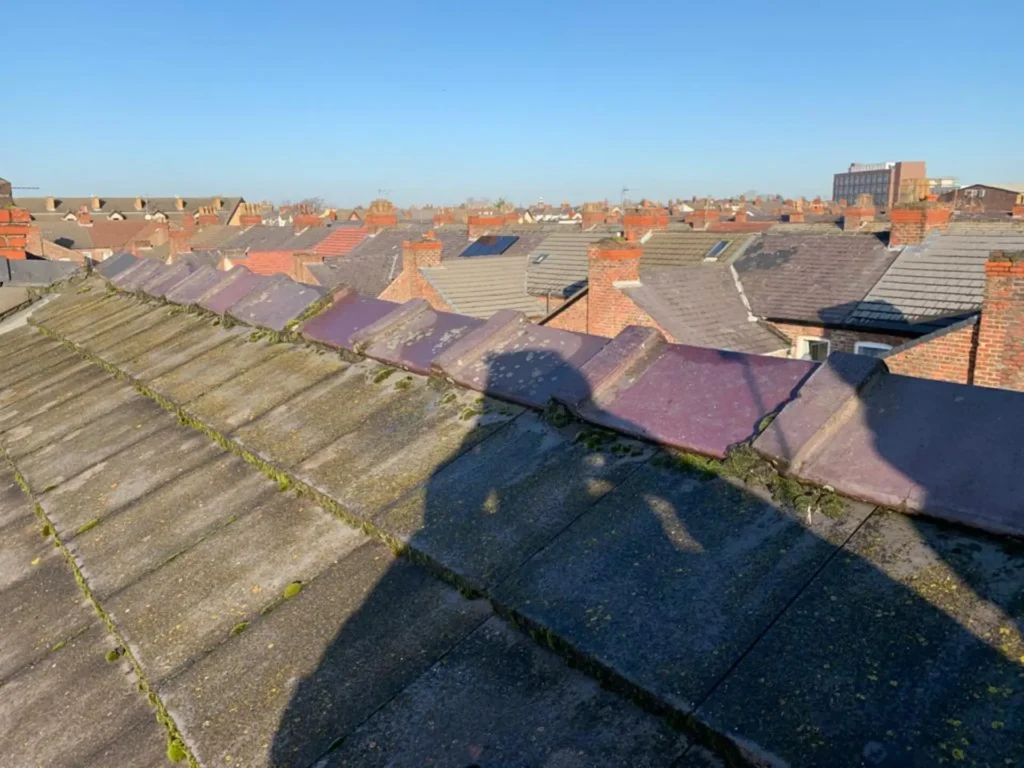
You spot a brown stain creeping across the bedroom ceiling after a wet night. Or there is a tile lying on the path when you open the front door. The question that follows is usually the same. Roof repair or replacement? Is this a quick fix, or am I looking at a whole new roof?
More often than not, the honest answer is a repair. A lot of the roof problems we attend to across Liverpool and Merseyside come down to one failed part, such as a slipped slate, cracked flashing or a split in a flat roof covering. Fix that part properly, and the rest of the roof carries on doing its job.
Replacement comes into the picture when faults are spread across the roof, when the felt and battens underneath are giving up, or when you have paid for the same leak to be fixed more than once.
At Roofer and Builder, we repair and replace flat, tiled and slate roofs from our base in Maghull, covering Liverpool, the wider Merseyside area, Wirral, Lancashire and Cheshire. This guide explains how we weigh up roof repair or replacement, what you can safely check yourself and which questions to ask before you agree to any work.
The short answer
- Repair when the problem sits in one area, and the rest of the roof is sound.
- Replace when deterioration is widespread, the underlay or battens have failed, or repairs keep coming back.
- Not sure? A proper roof inspection, with photographs, tells you which one you are dealing with.
When Is a Roof Repair Usually Enough?
A repair is usually the right call when the fault is contained, and the roof around it is still in decent condition.
Typical jobs we repair rather than replace:
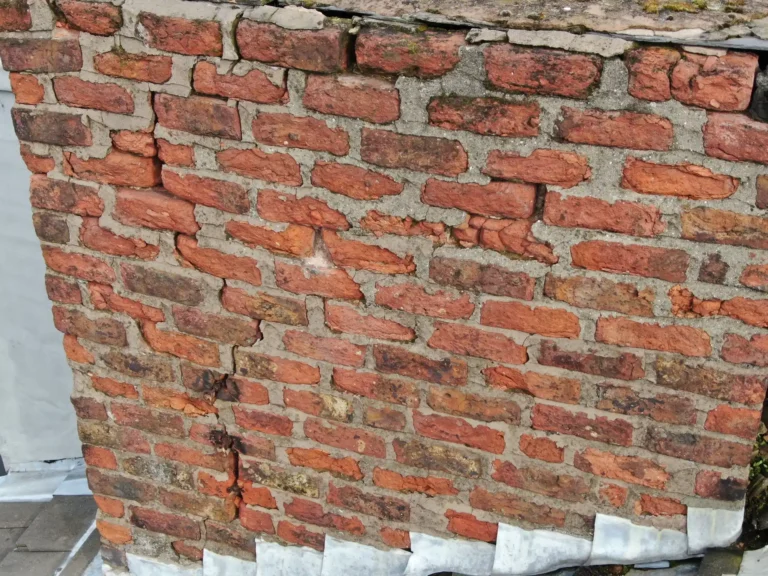
- A handful of slipped, cracked or missing tiles
- A few broken or slipped slates
- Flashing or leadwork that has lifted, cracked or come away around a chimney
- Ridge or verge mortar that has crumbled along one stretch
- A leak with a clear, single source
- A split or blister in one area of a flat roof
- Storm damage limited to one slope or section
Getting to these early matters. Water that gets past the covering does not stop at the felt. It soaks insulation, stains ceilings and, left long enough, starts rotting battens and rafters.
Catching a problem while it is still a straightforward roof repair is far cheaper than dealing with what it turns into.
The aim is always to fix what caused the leak, not just the stain it left behind. Sealant squeezed over a damp patch from inside the loft rarely holds for long.
When Does Roof Replacement Make More Sense?
Replacement becomes the sensible option when several parts of the roof are failing at once, or when the covering has simply reached the end of its working life.
Signs that point towards a re-roof rather than another patch:
- Leaks appearing in different places, not just one
- Tiles slipping on more than one slope
- Slates coming loose across the roof because the nails have rusted through, often called nail fatigue or nail sickness
- Roof felt that is brittle, torn or hanging down when you look up from the loft
- Battens that are soft or rotten in several places
- A flat roof where the membrane has broken down across most of its area
- A sagging or dipping roofline
- A roof that has already been patched many times over the years
None of these on its own means you definitely need a new roof. Two or three together usually do. If the felt is the worry, our post on how to tell if the roof felt has failed under the tiles goes into the detail.
A lot of Liverpool’s housing is Victorian and Edwardian terraces and semis, many still on their original slates with a century of patching behind them. Older concrete-tiled roofs on the post-war estates have their own issues, with tile surfaces eroding and underlay perishing. On roofs like these, another localised repair can mean spending money on a covering that is on its way out.
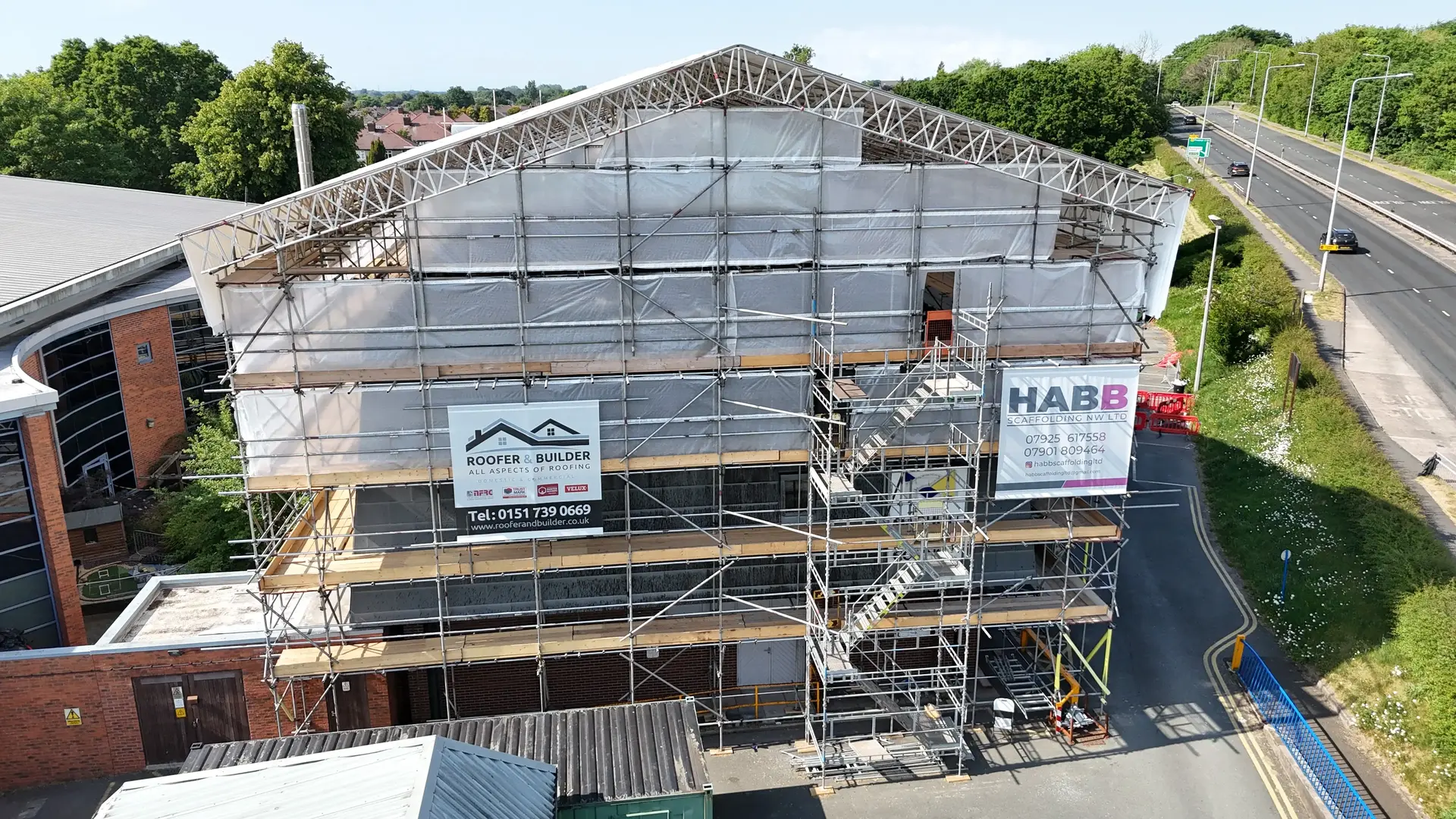
If you are already planning a loft conversion, a rear extension or a big refurbishment, that is also a good moment to look hard at the roof. Doing the roof while the scaffold is up for other work saves paying for access twice.
What Factors Determine Whether a Roof Should Be Repaired or Replaced?
There is no single rule, so we look at the whole picture. These are the factors that matter most:
- Overall condition: One defect on an otherwise healthy roof is a repair. Wear across several areas is a different conversation.
- Age and repair history: A roof that has had a lot of previous work needs a closer look, especially if those repairs were quick fixes.
- What is underneath: Damaged battens, perished underlay, a soft flat roof deck or affected timbers can make a surface repair pointless.
- Roof type: Flat, tiled and slate roofs fail in different ways. Flat roofs tend to go at joints, edges and outlets. Slate roofs often fail through their fixings. Tiled roofs usually give trouble at ridges, verges and valleys.
- Matching materials: Older slates and tiles can be hard to match. Reclaimed materials help, but where a match is not possible, a larger area may need re-covering so the roof still looks right.
- Your plans for the property: Insulation upgrades, loft conversions and extensions can all tip the balance.
Local weather plays its part too. Roofs across Liverpool and Merseyside take a lot of wind-driven rain, with coastal exposure on the Sefton and Wirral sides and gusts that find any lifted tile. Add a build-up of moss and a blocked gutter or two, and a roof that would be fine in a sheltered spot ages faster here.
Can a Small Leak be a Sign of a Bigger Problem?
Yes, sometimes. Where the water shows up inside is often not where it gets in.
Water comes in through a cracked tile, failed flashing or a bad joint, then runs along the underlay or down a rafter before dripping through a ceiling, sometimes a metre or more from the real entry point.
One stain under one slipped tile is a small job. Several damp patches, lifted coverings, crumbling mortar or a leak that comes back every time it rains is a sign something wider is going on.
This is why we check the roof around the leak, and the loft beneath it where we can, rather than guessing from the ceiling stain. Our roof leak repair page explains how we trace leaks on more complicated rooflines.
Can Part of a Roof be Replaced Instead of the Whole thing?
Yes. Partial replacement works well when one section has failed, but everything around it is still in good order. We often do this on:
- Extension and garage roofs
- One slope of a pitched roof after storm damage
- The area around a chimney stack, including new leadwork
- Sections around roof windows
- Individual flat roof bays
The condition of whatever it joins onto still matters. If the underlay and battens on the next slope are just as tired, stopping at an arbitrary line tends to mean coming back in a year or two. Where that is the case, we will say so and explain why a slightly bigger job is likely to be the better value.
Roof Repair or Replacement: Which Is More Cost-Effective?
A localised repair will almost always cost less than a new roof today. The real question is what each option costs you over the next ten years.
If the roof is generally sound, replacing a few failed parts is clearly the right spend. If different sections keep failing, each repair adds to a roof that still needs replacing, and the cost of a new roof doesn’t get smaller while you wait.
A good roofer should tell you three things: what needs doing now, whether the surrounding roof is showing wear, and whether further work is likely. With that in front of you, you can compare the repair cost against the longer-term picture and decide with your eyes open. We give free, no-obligation written quotes for both repairs and roof replacement, so you can see the figures side by side.
What Can You Safely Check Yourself?
You can pick up most of the early warning signs from the ground, an upstairs window or the loft hatch. Look for:
- Water marks or damp patches on ceilings, especially after heavy rain
- Staining, drips or daylight showing in the loft
- Missing, slipped or cracked tiles or slates
- Bits of tile, slate or mortar on paths and in gutters after a windy night
- Gutters overflowing or pulling away from the fascia
- Standing water on a flat roof you can see from an upstairs window
- Changes around the chimney, flashing or roof edges
Please do not go up on the roof. Wet slates and tiles are slippery, damaged areas can give way, and a fall from even a single-storey extension can be serious. Binoculars or a zoomed-in phone photo from the garden will show you most of what you need.
If water is coming in, move furniture and anything electrical out of the way, catch the drip and give us a call.
What a Proper Roof Inspection Should Cover?
Before anyone recommends a new roof, they should have looked at more than the obvious damage. Depending on the roof and the access available, a thorough roof inspection takes in:
- Tiles, slates or the flat roof membrane
- Flashings, leadwork and chimney stacks
- Ridges, hips, verges and valleys
- Gutters, downpipes and the roofline
- Underlay and battens, usually checked from the loft
- Visible roof timbers
- Ventilation and insulation
- Areas of previous repair
- Flat roof falls, joints and outlets
When we inspect a roof, we photograph what we find wherever access allows, talk you through the pictures and separate what is urgent from what can wait. If the roof is sound, we tell you that too. There is no obligation to go ahead with any work.
When Roof Damage Needs Emergency Attention?
Some problems can wait a week or two for a planned repair. Others cannot. Treat it as urgent if you have:
- Water actively coming in during rain
- Tiles, slates or ridge tiles loose after high winds
- Storm or impact damage that has opened the roof up
- Sections of covering that look as though they could come down
- Anything creating a risk to people below, such as loose material above a path or doorway
For emergency roof repairs across Merseyside, the first job is to make the area safe and stop the water, often with a temporary cover or a quick make-safe repair. That is a holding measure, not the finished job. Once the weather allows, the roof needs a proper look so the underlying fault gets fixed rather than hidden. Our 24/7 emergency line is 0151 739 0669.
Questions to Ask Before You Agree to Roofing Work
Whoever you use, ask them to explain what has failed and why. A roofer who knows their trade will not mind. Useful questions:
- What has caused the problem?
- Which parts of the roof are affected?
- Is the damage in one place or spread across the roof?
- Can it be repaired properly, or is this a temporary fix?
- Are the underlay, battens or timbers affected?
- Will you need scaffolding or a tower?
- Is any further work likely to be needed soon?
- What guarantee covers the work, and is it in writing?
If you have a slate roof, our post on questions to ask slate roofers before you hire goes into more detail.
When Is a Second Opinion Worth It?
If you have been told you need a whole new roof but nobody has shown you why, get another opinion before you commit. The same goes for a leak that keeps coming back after repeated repairs, which usually means the cause has not been found yet.
Photographs, a clear explanation and a written scope of work make it much easier to judge whether a recommendation stacks up. If a roofer cannot show you the problem, be cautious.
We are a family-run firm with more than 20 years in the trade, TrustMark registered and members of the NFRC, and we are happy to be the second opinion. If your roof only needs a repair, that is what we will tell you.
Make the Final Decision
It comes down to four things: how much of the roof is affected, what condition the materials underneath are in, whether a repair will actually last, and what your plans are for the property.
A roof that is sound apart from one failed area will usually be best served by a targeted repair. Where problems show up on several slopes, the underlay or battens are failing, or leaks keep returning, partial or full replacement is normally the more practical route.
If you are unsure which side of that line your roof falls on, an inspection is the quickest way to find out. Tell us your postcode and what you can see, and we will explain the most sensible options. Call 0151 739 0669 or request a free quote.