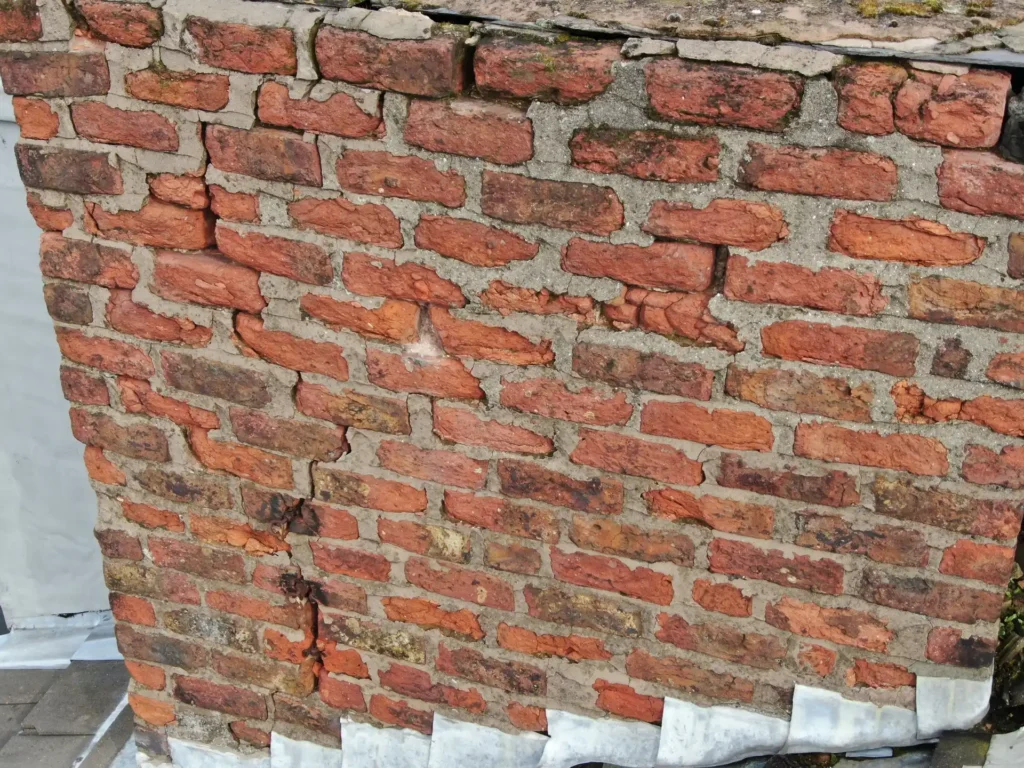
Your brickwork needs repointing when the mortar between the bricks starts to crumble, recede, crack or fall out, or when loose bricks and damp patches begin to appear on walls and chimneys.
A few worn joints don’t automatically mean the whole wall needs redoing. An early inspection can tell the difference between a small local repair and deterioration that has spread across an entire elevation.
Across Liverpool and Merseyside, driving rain, strong winds and coastal exposure soon find the weak points in ageing mortar. Older brick properties need extra care, because the wrong replacement mortar can damage softer traditional bricks.
At Roofer & Builder, we carry out brick repointing across Liverpool and Merseyside alongside our roofing and building work. Before recommending any repointing, we find out why the mortar is failing.
What Is Repointing and Why Does It Matter?
Repointing is the process of raking out damaged or deteriorated mortar from the joints between bricks and replacing it with a suitable new mortar.
In a well-built wall, the mortar is meant to be slightly softer than the bricks. It takes the brunt of the weather and wears first, so it can be renewed without disturbing the bricks themselves.
Over time, rain, frost and natural ageing cause joints to crack, crumble or open up. Repointing restores the wall’s weather resistance and protects otherwise sound brickwork. It can help to:
- reduce water getting into the wall through open or eroded joints
- protect brick edges that become exposed as the mortar wears back
- limit frost damage caused by repeated wetting, freezing and thawing
- preserve sound brickwork before deterioration becomes widespread
How much repointing a wall needs depends on the condition of the mortar and bricks, how far the damage has spread and whether another defect, such as a leaking gutter, is causing it.
7 Signs Your Brickwork Needs Repointing
Look out for these warning signs:
- Mortar crumbling or falling out of the joints
- Mortar receding between the bricks
- Cracks running through the mortar
- Damp patches appearing inside after rain
- Loose bricks or missing sections of pointing
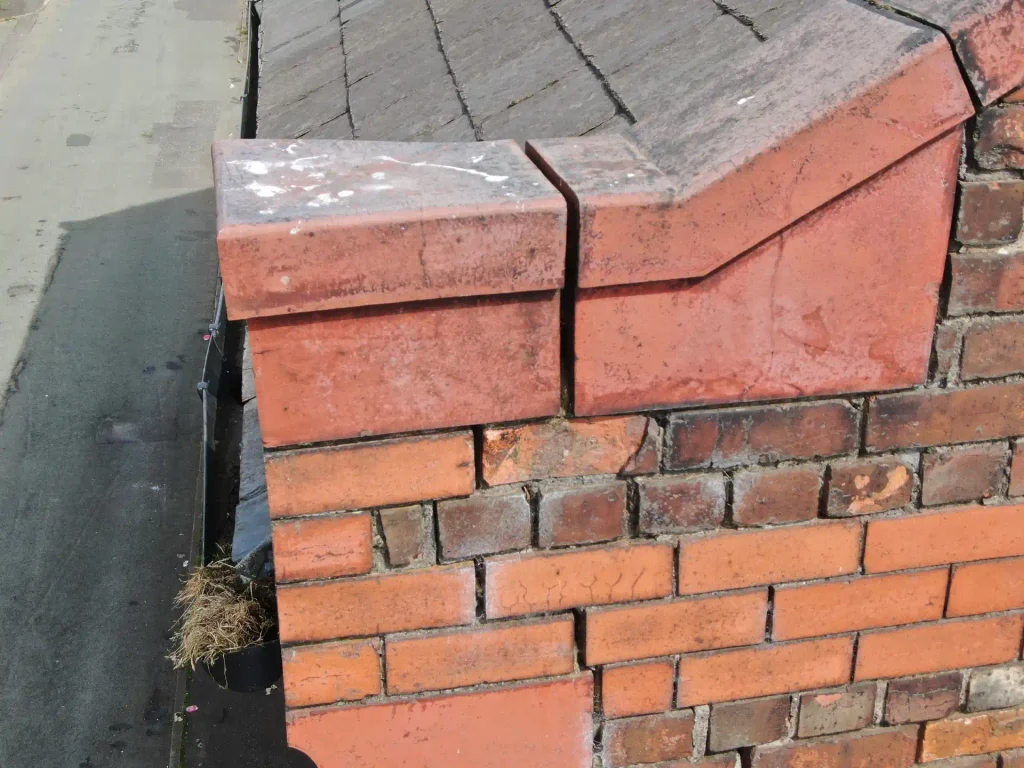
- Deteriorating mortar on the chimney stack
- Previous pointing repairs that are failing
The first four are common early signs of weathered mortar. The last three usually call for prompt attention.
1. Mortar Is Crumbling or Falling Out
Powdery, sandy or visibly loose mortar is a clear sign of deterioration. You might also notice grit collecting on window sills or along the base of the wall.
Small, isolated patches may only need a local repair. Widespread loss across a wall suggests more extensive repointing could be required.
2. The Mortar Has Receded Between the Bricks
Sound mortar should sit full enough in the joint to protect the brick edges, although the original joint profile varies from one property to another. Some joints are deliberately set back.
If the mortar has weathered noticeably backwards, leaving deep shadows along the joints or worn, rounded brick edges, the bricks are more exposed to the weather than they should be.
3. Cracks Are Appearing in the Mortar
Fine surface cracks aren’t always serious, but cracks that keep returning or get wider deserve attention.
They may simply be weathering. Larger cracks, or stepped cracking that zigzags through several joints, can point to movement in the building. In that case, the cause needs identifying before any repointing begins; otherwise, new mortar may only hide the problem for a while.
4. Damp Patches Are Appearing Inside
Damaged mortar can let moisture penetrate external walls. If damp patches appear after heavy rain, particularly on chimney breasts or walls facing the prevailing weather, deteriorated pointing is one possible cause.
Damp can also come from blocked gutters, damaged flashing, leaking pipes or a roof leak. It’s important to find the actual source rather than assume repointing will solve the problem.
More Serious Signs of Brickwork Deterioration
5. Bricks Are Becoming Loose
Mortar holds individual bricks firmly in position. If bricks feel loose, or whole sections of pointing have disappeared, don’t delay repairs.
The affected area may need new mortar as well as resetting or replacing damaged bricks. Loose masonry at height, such as on a parapet or chimney, can also become a safety risk to people below.
6. Chimney Mortar Is Deteriorating
Chimney stacks are exposed to wind and rain on every side, which makes their mortar joints especially vulnerable.
Missing or cracked joints, loose bricks and crumbling masonry on a chimney should all be investigated. Lead flashing is usually tucked into the mortar joints where the stack meets the roof, so failing pointing here can also let water in around the flashing.
That’s why a leak near a chimney can look like a roofing problem when deteriorated masonry is partly to blame. Our chimney repairs team can check the flaunching, pots and flashing at the same time as the pointing.
For other warning signs, read our guide to when a chimney stack needs urgent repair.
7. Previous Pointing Repairs Are Failing
Older properties sometimes have patches of mortar that look harder, smoother or a noticeably different colour from the surrounding joints. Pointing that stands proud of the brick face is another warning sign, as it can trap water against the bricks.
These earlier repairs may have failed or been carried out with the wrong mortar. A hard cement mortar on softer traditional brickwork can push moisture and movement into the bricks instead of the joints. Over time, that can cause the brick faces to crack or flake away, known as spalling.
What Causes Mortar Joints to Deteriorate?
Common causes include:
- driving rain, high winds and coastal exposure
- freeze-thaw weathering and repeated wetting and drying
- moss, vegetation and blocked gutters holding moisture against walls
- leaking downpipes, roof coverings or lead flashing
- poor-quality or incompatible previous repairs
- natural ageing, particularly in older brick properties
- movement around extensions, loft conversions and flat roof junctions
Where moisture is contributing to the damage, the source should be fixed before or alongside the repointing. New mortar beneath an overflowing gutter or damaged flashing will soon start to erode again, so gutter repairs or flashing work may need to come first.
What Happens If Damaged Mortar Is Left Untreated?
As mortar disappears, more of each brick is exposed to moisture.
Over time, this can lead to increased water penetration, loose bricks, and damage to the brick faces themselves. Once bricks start to spall or crack, the job becomes more involved than straightforward repointing, because damaged bricks may need cutting out and replacing.
Timely repointing is mainly about protecting sound brickwork and avoiding that extra work.
Does Damaged Mortar Mean the Whole Wall Needs Repointing?
No. Small areas of damaged or weathered mortar may only need localised pointing repairs, and removing sound mortar unnecessarily does more harm than good.
Historic England’s guidance on repointing brick and stone walls makes the same point for older buildings. Full repointing is rarely necessary, and the areas most likely to need attention are those most exposed to the weather or affected by problems such as leaking gutters and rainwater pipes.
If deterioration affects a large proportion of an elevation, more extensive repointing can provide a consistent, longer-lasting repair. Any inspection should consider the mortar, the bricks and the surrounding building before deciding how much work is needed.
What Type of Mortar Should Be Used for Repointing?
The right mortar depends on the age, construction and existing materials of the property.
Most modern brickwork is built with cement-based mortar. Older and traditionally built properties, including many of the Victorian and Edwardian terraces found across Liverpool, typically used a softer, more breathable lime-based mortar.
As a general rule, new mortar should be no harder or less breathable than the bricks around it. An unnecessarily hard or incompatible mix can trap moisture and damage softer bricks rather than protect them.
For older properties, the existing mortar, the brick condition and the original joint finish should all be considered before work begins. We carry out both standard and lime mortar repointing, matching the joint profile and mortar colour to the existing brickwork.
When Is the Best Time to Repoint Brickwork?
Repointing is best carried out in settled, mild weather. Fresh mortar needs protecting from heavy rain, frost, strong drying winds and hot sun while it cures.
In the UK, that usually means spring through to early autumn, and lime mortar is particularly vulnerable to frost. Work can go ahead at other times of year if the forecast allows and the new pointing is properly protected.
A good contractor will weigh up the mortar type, how exposed the wall is and the forecast, then protect the new work until it has cured.
How Can You Check Your Brickwork Safely?
You can carry out a basic visual check from ground level. Pay particular attention to:
- walls facing the prevailing wind and rain
- chimney stacks and parapets
- areas around gutters, downpipes and overflow pipes
- junctions with extensions, porches and flat roofs
Look for mortar or brickwork that looks noticeably different from the surrounding areas. A pair of binoculars can help you see chimneys and higher sections more clearly.
Don’t climb ladders or go onto the roof to investigate high-level defects. If the deterioration is around a chimney, roofline or another hard-to-reach area, a professional inspection is the safer way to assess it.
When Should You Get Your Brickwork Inspected?
Arrange an inspection when:
- mortar is falling out across larger areas
- bricks are loose
- cracks are widening or returning after repair
- damp appears inside after rainfall
- deterioration is visible around a chimney or roofline
If there is active water ingress, storm damage, loose masonry or a risk to people below, get help promptly. Our emergency building works team can assess urgent damage and make the affected area safer where practical.
Because we work on both roofs and brickwork, we can look at the wall, roofline, chimney, gutters and adjoining construction together. Where moisture is involved, that helps us find the real source rather than repairing the wrong area.
Worried About Crumbling Mortar?
Repointing works best when you identify the cause of the damage, keep sound mortar where possible and choose new mortar that suits the building.
Minor defects may only need targeted work. Widespread deterioration, signs of movement or ongoing damp are worth having inspected before they lead to bigger repairs.
Roofer & Builder carries out brick repointing and brickwork repairs across Liverpool, Merseyside and the Wirral. Tell us your postcode and what you’ve noticed, and we’ll advise on the next step. Call 0151 739 0669 or request a free quote.