Roof Defect on a Home Survey: What Should You Do Next?
Finding a roof defect on a home survey can be worrying, particularly when you are already dealing with mortgage arrangements, solicitors and the other pressures that come with buying a property.
The important thing is not to assume the worst. A roof defect does not automatically mean the property needs a completely new roof, and it does not necessarily mean you should walk away from the purchase.
What you need is a clear understanding of the problem before exchanging contracts. That normally means reading the survey carefully, speaking to the surveyor and arranging an independent roof inspection to establish what is wrong, how urgent the problem is and what the likely repair cost will be.
If the survey mentions significant sagging, movement or damage to structural timbers, you may also need advice from a suitably qualified structural engineer.
What Does a Roof Defect on a Home Survey Mean?
A home survey records the condition of the property that the surveyor could safely and reasonably assess on the day of the inspection.
Surveyors cannot always inspect every tile, slate, flashing detail or roof timber. Loft insulation, stored belongings, restricted access, roof height and concealed construction can all limit what can be seen.
This means a roof defect mentioned in a survey may be:
- a confirmed problem
- a visible warning sign
- evidence of previous water ingress
- an area requiring further investigation
- a defect that could not be fully assessed because of access restrictions
If the report recommends further investigation, do not immediately assume a complete roof replacement is required.
The sensible next step is to establish exactly what the surveyor has seen and arrange a more detailed inspection of the affected area.
What Should You Do After Receiving the Survey?
A structured approach will help you make a better decision about the property.
1. Read the Roof Section Carefully
Start by checking exactly what the survey says about the roof. Look for:
- the location of the defect
- condition rating
- signs of water ingress or damp
- slipped, cracked or missing tiles or slates
- flashing, chimney or leadwork defects
- sagging or movement
- damaged timbers
- areas that could not be inspected
- recommendations for further investigation
If the wording is unclear, ask your surveyor to explain what they found and how serious it may be.
There is a big difference between a few slipped slates and evidence of structural movement, so you need to understand the scale of the issue before making a decision.
2. Arrange a Specialist Roof Inspection
Ask an experienced roofing contractor to inspect the roof and establish the likely cause, extent and urgency of the problem.
If there are signs of water penetration, a specialist roof leak repair inspection can help identify where water is entering and what repairs are required.
Ask for written findings covering:
- the likely cause
- affected areas
- whether the issue is active or historic
- urgent weatherproofing needs
- repair options
- access or scaffolding requirements
- an itemised quotation
For properties in Liverpool and Merseyside, choose a roofer familiar with local roof types, including slate, tiled and flat roofs.
3. Decide Whether to Proceed or Renegotiate
Once you have a written quotation, discuss the findings with your solicitor or conveyancer.
You may decide to proceed, renegotiate the price, request repairs, investigate further or budget for work after completion.
A detailed roofing quotation gives you stronger evidence for negotiations than a general concern that the roof appears to need work.
What Roof Defects Commonly Appear on Home Surveys?
The problems found will depend on the age of the roof, the materials used, the level of exposure and the quality of previous repairs.
Some defects are routine maintenance issues. Others can allow water into the building and cause considerably more damage if they are ignored.
Common Problems With Slate Roofs
Slate remains common on older properties throughout Liverpool and Merseyside, particularly Victorian and Edwardian terraces.
Common problems include:
- slipped slates
- cracked or broken slates
- missing slates
- corroded fixings
- damaged ridge details
- failed lead flashing
- previous patch repairs
- deteriorated underlay
A few slipped or damaged slates do not automatically mean the whole roof needs replacing.
In many cases, properly carried out slate roof repairs can address localised defects while retaining the serviceable parts of the existing roof.
Older properties may also have had several generations of repairs. It is worth checking whether unsuitable materials or poor previous workmanship are contributing to the current problem.
Common Problems With Tiled Roofs
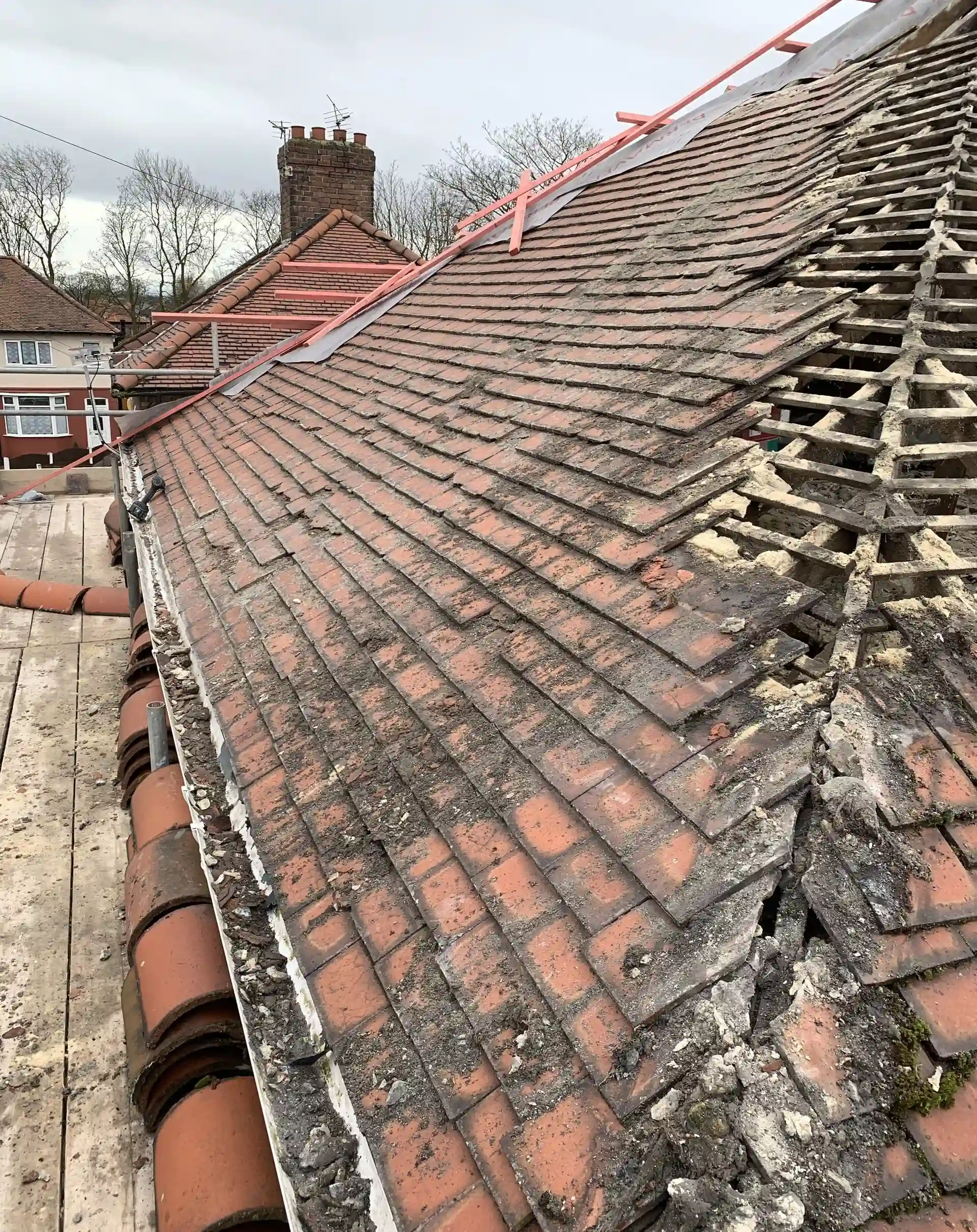
Tiled roofs can also develop defects through age, storm damage, movement or previous repairs.
A survey may identify:
- cracked tiles
- missing tiles
- slipped tiles
- damaged ridge tiles
- deteriorated mortar
- verge defects
- damaged underlay
- poor flashing details
- water ingress around roof penetrations
Localised tile roof repairs may be enough where the surrounding roof remains sound.
The important question is whether the problem is confined to a small area or whether the roof covering is showing widespread deterioration.
What Problems Affect Flat Roofs?
Flat roofs require a different approach because the source of a leak can be difficult to identify from inside the property.
Common survey findings include:
- splits in the roof covering
- punctures
- failed joints
- damaged upstands
- defective edge details
- blocked outlets
- areas where water regularly collects
- deteriorated previous patches
A damp patch on a ceiling does not necessarily sit directly below the original point of water entry.
Moisture can travel beneath the covering or along parts of the structure before it appears inside the property.
This is why simply sealing the section immediately above a damp patch does not always solve the problem. A proper flat roof repair assessment should identify the likely route of water entry before repair work begins.
Could Guttering Be Causing What Looks Like a Roof Leak?
Yes. Not every damp patch around the edge of a roof is caused by a failure of the roof covering.
Blocked, damaged or poorly aligned guttering can allow large amounts of rainwater to overflow onto brickwork, fascias and other parts of the building.
Problems may include:
- blocked gutters
- leaking joints
- sagging gutter runs
- damaged brackets
- blocked downpipes
- inadequate falls
- overflowing outlets
Arranging gutter repairs in Liverpool may solve the problem if the water ingress is being caused by defective rainwater drainage rather than the main roof covering.
This is another reason why identifying the source of the problem is more important than simply repairing the first visible symptom.
Could the Chimney Be Responsible for the Leak?
Chimneys are another common source of roof defects on older properties.
Water can enter through failed lead flashing, damaged pointing, cracked chimney pots, deteriorated flaunching or defective masonry.
Typical warning signs include:
- staining around the chimney breast
- damp within the loft
- loose masonry
- damaged flashing
- cracked mortar joints
- unstable chimney pots
- vegetation growing from masonry joints
Where the problem originates around the chimney, specialist chimney stack repairs may be required rather than replacing large sections of otherwise sound roofing.
Could the Roof Structure Be Damaged?
Long-term water ingress can eventually affect the structure beneath the roof covering.
Moisture may damage:
- rafters
- joists
- battens
- roof decking
- insulation
- ceilings
- plasterwork
- internal finishes
A roofer can assess the roof covering, drainage and weatherproofing, but significant structural concerns may require a structural engineer.
Examples include substantial sagging, spreading, significant movement, inadequate structural support or seriously deteriorated load-bearing timbers.
Do not assume a structural engineer is necessary because the survey simply mentions a roof defect.
At the same time, do not rely solely on a roofing quotation if your surveyor has identified evidence of significant structural movement. Different professionals deal with different aspects of the problem.
When Does a Roof Defect Need Urgent Attention?
Some problems can be included within planned maintenance. Others need prompt attention to prevent further damage or reduce a safety risk.
Arrange professional assistance quickly if you find:
- active water entering the property
- storm damage exposing the interior
- loose tiles or slates
- loose masonry that could fall
- significant roof sagging
- structural movement
- an unstable chimney
- widespread flat roof failure
- badly decayed structural timbers
Where a storm or sudden failure has left the property exposed, emergency roof repairs may initially focus on making the area safe and reducing further water penetration.
A permanent repair can then be completed once conditions, materials and safe access allow.
Never climb onto the roof yourself to investigate a survey finding. Roof work is hazardous work at height and should be properly planned and carried out using suitable access and safety equipment.
What Is the Difference Between a Temporary and Permanent Roof Repair?
A temporary repair is intended to provide short-term protection.
It may involve:
- securing loose materials
- covering an exposed section
- temporarily sealing an opening
- reducing immediate water entry
A permanent repair tackles the cause of the defect.
Depending on the findings, that could involve:
- replacing damaged tiles or slates
- renewing flashing
- repairing leadwork
- repairing ridge or verge details
- correcting guttering problems
- renewing part of a flat roof
- replacing damaged timber
- correcting defective previous workmanship
Temporary roof repairs should not be left in place indefinitely.
Allowing water to continue entering the roof can turn a relatively small repair into damage affecting insulation, plasterwork, ceilings and structural timbers.
Does Every Roof Defect Mean You Need a New Roof?
No.
This is one of the most important things for buyers to understand.
Surveyors highlight defects and potential risks, so reports can sound serious even when the roof does not require complete replacement.
For example, a roofer may only need to refit slipped slates and renew defective chimney flashing on an otherwise serviceable slate roof.
A complete replacement becomes more likely when:
- defects are widespread
- the covering is near the end of its useful life
- large areas have failed
- the supporting materials are extensively damaged
- previous repairs have repeatedly failed
- targeted repairs would no longer provide sensible value
A reputable roofer should clearly explain why they recommend repairing or replacing the roof.
If someone recommends a complete new roof after a very brief inspection, ask them to show you exactly why replacement is necessary.
Could a Roof Defect Affect Your Mortgage?
Potentially.
A mortgage lender uses a valuation to assess whether the property offers suitable security for the loan, not to provide a detailed condition survey.
If a serious roofing defect is identified, the lender may ask for further information before proceeding.
Depending on the lender and the severity of the problem, they may ask for:
- a specialist report
- repair quotations
- further structural investigation
- confirmation that repairs have been completed
Requirements vary between lenders and properties, so provide any requested information promptly and ask your mortgage adviser or lender to explain any conditions attached to the mortgage offer.
Will Buildings Insurance Cover Roof Repairs?
Whether a roof problem is covered depends on what caused the damage and the terms of the insurance policy.
Damage arising from a specific insured event may be treated differently from deterioration caused gradually by age, wear and tear or lack of maintenance.
If your survey has already identified a roof defect, tell the proposed insurer and ask whether it will affect:
- the cover available
- exclusions
- excesses
- the premium
- any conditions attached to the policy
Do not assume that an existing leak will automatically be covered after you buy the property.
Do Roof Repairs Need Planning Permission?
For a property in Liverpool, the planning rules applicable in England will normally apply.
Limited repairs that replace roofing materials on a like-for-like basis and do not materially change the appearance of the property will not generally require a full planning application.
Different considerations can apply where:
- the building is listed
- the property is within a conservation area
- the work substantially changes the appearance of the roof
- the proposed work includes major alterations or additions
If there is any doubt, check the specific proposal with the relevant local planning authority before work begins.
Planning permission and Building Regulations approval are separate matters.
Do Roof Repairs Need Building Regulations Approval?
Routine maintenance and smaller repairs will not necessarily require Building Regulations approval.
Building control may require approval for extensive roofing work, particularly when contractors renew large roof areas or make structural alterations.
Requirements can also arise where work affects areas such as:
- structural loading
- insulation
- thermal performance
- fire performance
- major roof alterations
Ask your contractor how they will meet Building Regulations requirements for extensive re-roofing or structural work, then confirm the requirements with building control.
How Much Could a Roof Defect Cost to Repair?
There is no reliable single price because the words “roof defect” can describe anything from one displaced tile to widespread structural deterioration.
The cost of roof repairs in Liverpool will depend on factors including:
- the type of roof
- the materials required
- the extent of the defect
- the height of the building
- roof pitch
- ease of access
- scaffolding requirements
- chimney and leadwork details
- waste disposal
- hidden damage uncovered during the work
This is why a written quotation based on an actual inspection is much more useful than a generic online roof repair price.
When comparing quotations, check what each roofer has included.
A cheap quote may not include scaffolding, leadwork, waste removal or repairs to hidden damage. Compare the scope of work as well as the final figure.
Questions to Ask a Roofer Before Buying the Property
A roofing inspection is more useful when you ask specific questions.
- What Is Causing the Problem?
Ask the roofer to identify the likely source rather than simply pointing out the visible damage.
The place where water appears inside the house may not be where it originally entered.
- Is the Damage Localised?
Find out whether one area can be repaired or whether deterioration affects a much larger part of the roof.
This can make a major difference to your repair budget.
- How Urgent Is It?
Ask whether the repair needs immediate attention or whether it can reasonably be scheduled after you move into the property.
- Is Scaffolding Required?
Scaffolding and access can form a significant part of the overall cost.
Make sure the quotation clearly states whether scaffolding is included.
- Are There Signs of Structural Damage?
If significant structural problems are suspected, ask whether a structural engineer should inspect the roof.
- Is Full Replacement Really Necessary?
If a complete new roof is recommended, ask why targeted repairs are not considered suitable.
The contractor should be able to explain the condition of the existing roof and the reasoning behind the recommendation.
- What Exactly Is Included in the Quote?
A useful quotation should clearly describe the work being priced.
Check whether it includes:
- materials
- labour
- scaffolding
- waste disposal
- leadwork
- timber repairs
- making good
- VAT, where applicable
- guarantees, where offered
The clearer the quotation is, the easier it will be to compare contractors and use the figure when discussing the purchase.
How Can You Reduce the Risk of Future Roof Damage?
Once you own the property, regular maintenance can help prevent small defects developing into expensive problems.
Useful preventative measures include:
- keeping gutters and outlets clear
- clearing roof valleys when necessary
- replacing isolated slipped tiles or slates promptly
- investigating damp or staining in the loft
- maintaining chimney flashing and leadwork
- checking visible roof damage following severe storms
- treating temporary patches as short-term measures
- checking flat roof drainage
- keeping inspection reports, quotations, invoices and guarantees together
You do not need to climb onto the roof to look after it properly.
Visual checks from ground level, safe inspections from within the loft and professional roofing inspections when there are signs of a problem are much safer options.
Should You Buy a House With a Roof Defect?
A roof defect should form part of your overall assessment of the property rather than automatically deciding the purchase for you.
A relatively small repair may be manageable within your existing budget. A serious structural problem or complete roof replacement could have a much greater effect on whether the property still represents good value.
Before deciding, make sure you understand:
- What is wrong.
- What caused it.
- Whether the damage is getting worse.
- How urgently it needs repairing.
- Whether structural work is required.
- What the realistic repair cost will be.
- Whether the price of the property still makes sense.
Having these answers before you exchange contracts puts you in a much stronger position.
Buying a House With a Roof Defect: What Should You Do Next?
A roof defect on a home survey is a reason to investigate properly, not automatically a reason to abandon the purchase.
Start by reading the survey carefully and asking the surveyor to clarify anything you do not understand.
Next, arrange a specialist roof inspection and obtain written findings with an itemised quotation.
You can then use that evidence when discussing the property with your solicitor, mortgage adviser and seller.
Some properties will only need routine maintenance or a targeted roof repair. Others may require urgent roofing work, more extensive replacement or investigation by a structural engineer.
The key is to establish the actual condition of the roof before making a financial decision based on assumptions.
Need a Roof Inspection or Roof Repair in Liverpool?
If your home survey has identified a problem with a tiled, slate or flat roof, Roofer & Builder can inspect the visible defects and explain the practical repair options available.
We work with homeowners, buyers, landlords and property managers across Liverpool, Merseyside and surrounding areas, helping identify roofing problems before they develop into more expensive damage.
Whether the survey has highlighted a leak, slipped tiles, damaged slates, defective leadwork, chimney problems, guttering defects or concerns about a flat roof, the first step is understanding what actually needs repairing.
Contact Roofer & Builder to arrange an inspection or discuss roof repairs in Liverpool before making your next decision.