Why Is My Roof Sagging or Bowing? Signs the Problem May Be Structural
A sagging or bowed roofline can indicate timber deterioration, inadequate restraint, excess loading or movement within the roof structure. However, an uneven roof does not automatically mean the building is unsafe.
Older properties can develop slight irregularities over time, while slipped tiles, damaged battens or deteriorated flat roof decking may create local dips that are not structural.
If a ridge has dropped, a roof slope has become wavy or new cracks have appeared around upstairs ceilings, a professional inspection can help determine whether the issue is historic, localised or structural.
What Does a Bowed or Sagging Roof Look Like?
A roof sagging should generally appear reasonably straight along the ridge, slopes, valleys and eaves.
Minor irregularities are common on some older Victorian and Edwardian properties across Liverpool and Merseyside, but noticeable or worsening changes should be investigated.
Signs include:
- A dip along the ridge
- A hollow or wave in one roof slope
- Uneven eaves, valleys, tiles or slates
- One area sitting lower than the surrounding roof
- Repeated tile movement or recurring leaks
- A roofline that has changed recently
Terms such as roof deflection, rafter deflection, roof distortion and dropped ridge describe different forms of movement.
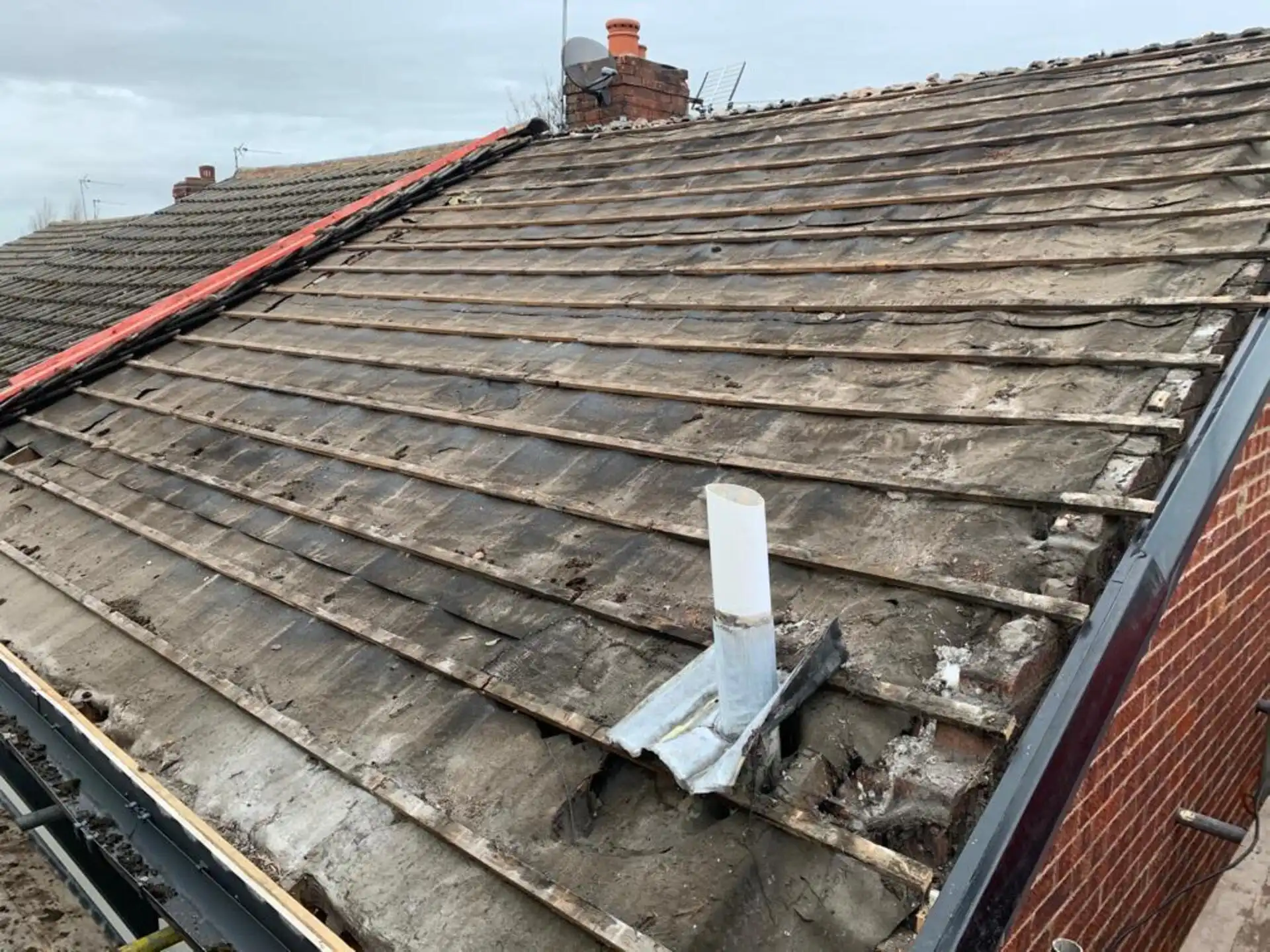
Inside the loft, curved, cracked or displaced timbers, damp staining or gaps between roof components can provide further clues.
What Causes Roof Deflection or Structural Movement?
Roof movement can have several causes, and the correct repair depends on identifying what has changed or failed.
Can Water Damage Weaken Roof Timbers?
Yes. Persistent water ingress can lead to timber decay and loss of strength.
Leaks may develop around slipped slates, cracked tiles, flashing, leadwork, ridge details or failed flat roof membranes. Poor ventilation can also contribute to condensation.
A roof leak repair should address both the moisture source and any resulting damage.
What Is Roof Spread?
Roof spread occurs when pitched rafters push outwards, and the roof lacks sufficient restraint. This can contribute to movement at supporting walls and a drop at the ridge.
Possible causes include altered or missing ties, weakened supports, previous loft alterations or movement within supporting masonry.
Cutting structural timbers without proper assessment can also change how roof loads are transferred.
Can Heavy Roof Coverings Cause Rafter Deflection?
They can. Replacing a light roof covering with a significantly heavier material may increase the load on rafters, purlins and other structural elements.
Excessive loft storage can also overload ceiling joists that were not designed to act as a floor.
Moss and debris may retain moisture or restrict drainage but do not alone prove structural overloading.
Why Do Flat Roofs Dip or Bow?
Flat roofs can develop low spots when decking or supporting joists deteriorate or deflect. Blocked outlets, poor falls or damaged membranes can also cause ponding.
An inspection should establish whether the defect is limited to the covering or extends into the deck and joists.
Which Signs May Point to a Structural Roof Problem?
Arrange an inspection if visible roof movement appears alongside:
- A ridge or slope continuing to drop
- Cracked, splitting or displaced rafters or purlins
- Fresh cracks where upstairs walls meet ceilings
- Bowing plasterboard
- Upper-floor doors or windows suddenly sticking
- Movement following a storm or building alteration
No single sign confirms structural failure. Their significance increases when several symptoms appear together or worsen over time.
When Does Roof Movement Need Emergency Attention?
Urgent action is appropriate where movement is sudden, or there is an immediate risk from unstable materials.
Seek emergency roofing assistance if you notice:
- Rapid or continuing movement
- Cracking or breaking sounds
- Falling tiles, timber or ceiling material
- A ceiling that appears close to collapse
- Water entering around electrical fittings
- Broken or displaced supports
- Severe storm damage
- Part of the building becoming visibly unstable
Keep people away from the affected area and avoid entering the loft if materials appear unstable. Do not cut, prop or reposition suspect timbers yourself.
The Health and Safety Executive states that roof work is high risk and should be properly planned, with suitable precautions and competent people carrying out the work.
A roofer will normally inspect the external covering and accessible areas inside the loft.
How Is Roof Deflection Diagnosed?
Externally, this may include the ridge, slopes, valleys, tiles, slates, flashing, leadwork, chimneys, gutters and drainage outlets.
Inside the loft, checks may include:
- Moisture staining or timber decay
- Curved, cracked or displaced rafters
- Missing or altered supports
- Signs of roof spread
- Condensation or poor ventilation
- Previous loft conversion work
- Movement around supporting masonry
If wider structural movement is suspected, a structural engineer may be needed to assess the building and specify remedial work.
Can a Bowed or Distorted Roof Be Repaired?
Often, yes. The repair depends on the cause, condition and extent of movement.
Possible works include:
- Replacing decayed timber
- Strengthening rafters, joists or purlins
- Carrying out a specified truss repair
- Reinstating missing restraint
- Repairing tiles, slates, flashing or leadwork
- Renewing damaged flat roof decking
- Improving drainage
- Partially or fully replacing the roof where necessary
Straightening a bowed component without addressing the cause is unlikely to provide a reliable long-term repair.
Do Structural Roof Repairs Need Building Regulations Approval?
Structural alterations normally require building regulations consideration.
Re-covering work can also trigger approval depending on its extent and whether the new covering changes structural loading, fire performance or thermal performance.
Planning Portal guidance states that approval is required for structural alterations and can apply where a new covering increases roof weight by 15% or more. Larger re-roofing works may also trigger insulation requirements.
Check with building control before significant work begins. Planning permission is separate and may also need consideration for listed buildings, conservation areas or alterations that materially change the roof’s appearance.
How Can You Reduce the Risk of Future Roof Movement?
Regular maintenance can help prevent local defects from becoming more serious.
Useful steps include:
- Repair leaks promptly
- Keep gutters and outlets clear.
- Investigate recurring ceiling stains
- Maintain suitable loft ventilation
- Check the roof after severe weather
- Avoid excessive loft storage.
- Never remove or cut roof timbers without professional advice.
- Check structural capacity before changing roof coverings.
- Monitor flat roofs for ponding or membrane failure
When Should You Arrange Roof Repair in Liverpool?
Arrange an inspection when a roof dip, sagging, bow or dropped ridge is new, worsening or accompanied by leaks, cracked ceilings, damaged timber or movement elsewhere in the property.
Minor historic distortion may only need monitoring or local repair. Timber decay, roof spread, damaged supports or significant deflection may require structural advice alongside roofing work.
For homeowners looking for roof repair in Liverpool, the first step should be identifying the cause rather than assuming the roof needs complete replacement.
Roofer & Builder can inspect tiled, slate and flat roofs across Liverpool, Merseyside and the wider North West, explain the likely cause and advise whether monitoring, targeted repair, structural engineering input or replacement is appropriate.