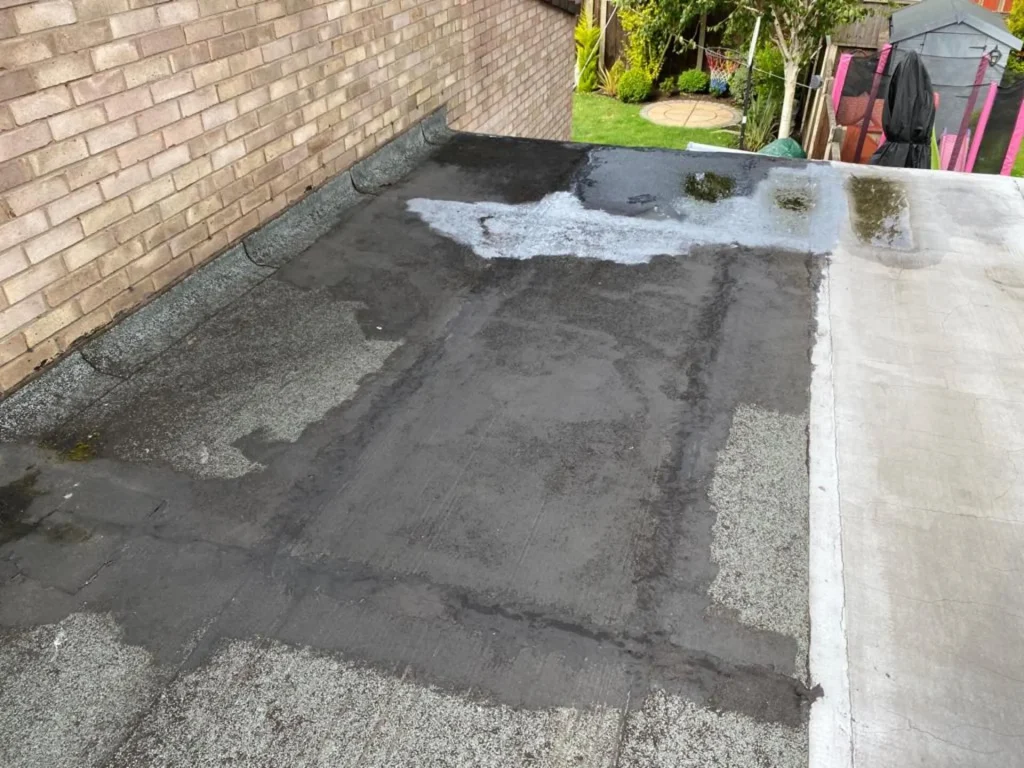
A leaking garage flat roof can quickly become a real concern, especially when water starts dripping near tools, electrical equipment, stored furniture, bikes, stock or household belongings. In Liverpool, Maghull and across Merseyside, heavy rain, strong winds, moss growth and blocked gutters can turn a small issue into damp patches, staining or active water ingress.
The good news is that not every leak means your whole garage roof has failed. In many cases, the cause may be a blocked outlet, an overflowing gutter, damaged flashing or a small split in the roof covering. The key is to make the area safe, reduce further damage and identify the true source before deciding on the right repair.
At Roofer and Builder, we help homeowners, landlords and local businesses understand what is happening before recommending a practical solution.
Why Garage Flat Roofs Start Leaking
Garage flat roofs work differently from pitched roofs. Instead of relying on tiles or slates to shed rainwater quickly, a flat roof depends on a waterproof surface, sealed edges and clear drainage.
Over time, weather and wear can affect these areas. Common causes of garage flat roof leaks include:
- Split, cracked or blistered roof felt
- Failed joins or seams in the roof covering
- Ponding water after heavy rain
- Blocked gutters, downpipes or roof outlets
- Damaged flashing where the garage roof meets a wall
- Wind-lifted edges
- Poor previous patch repairs
- Age-related wear to the roof surface
- Rotten or weakened roof decking beneath the covering
Older properties across Liverpool and Merseyside can be more prone to these problems, particularly where garages have been added later or where existing materials are nearing the end of their usable life.
Early Signs of a Garage Roof Leak
Spotting a problem early can help prevent more serious damage. A small stain or occasional drip may not look urgent at first, but water can spread through boards, insulation and brickwork before it becomes obvious inside.
Look out for:
- Damp patches on the garage ceiling or walls
- Water stains around the roof edges
- Drips or pooling water inside the garage
- A musty smell
- Mould or mildew
- Peeling paint or bubbling plaster
- Wet timber, stored boxes or flooring
- Overflowing gutters during rainfall
- Water running down the outside wall
It is worth noting that a gutter issue can look very similar to a roof leak. If watermarks appear close to the edges of the garage, above a door or near a downpipe, the issue may be overflowing guttering rather than the main roof covering.
Quick Make-Safe Steps During a Leak
If water is coming into your garage, focus on safety first. You do not need to solve the full problem immediately, but you should reduce the risk of further damage.
Start by moving valuables away from the leak. Put a bucket, tray or waterproof container underneath the drip to catch water. If water is near sockets, lights, extension leads or electrical equipment, do not touch anything wet. Turn off the affected area only if it is safe to do so.
Avoid climbing onto the garage roof. A wet flat roof can be slippery, fragile or rotten beneath the surface. Even if the roof looks solid from the ground, it may not be safe to walk on.
A professional make-safe visit may include:
- Locating the obvious entry point
- Installing a temporary cover
- Clearing a blocked outlet or gutter
- Checking downpipes
- Sealing a small exposed area where suitable
- Advising on the next step once conditions improve
Emergency roof repairs are often about making the area weather-tight first, then carrying out a proper inspection when it is safe.
How to Find the Source of the Leak
Before assuming you need a full garage roof replacement, it helps to work out where the water may be entering.
From ground level, check whether gutters are overflowing when it rains. Leaves, moss, silt, loose clips and blocked downpipes can stop water from draining properly. When this happens, water can run behind fascia boards, down brickwork or back towards the garage wall.
Also look for:
- Water spilling from one section of guttering
- A blocked or disconnected downpipe
- Staining below gutter joints
- Loose or cracked flashing
- Gaps where the roof meets a wall
- Standing water on the roof surface
- Cracks, bubbles or splits in the roof covering
- Slipped tiles above the garage if it joins the house
Inside the garage, mark where the water appears. This can be helpful during an inspection. Water does not always drip directly below the damaged area, as it can travel along boards or beams first.
Common Garage Flat Roof Repairs
The right repair depends on the cause of the leak, the age of the roof and the condition of the surface underneath.
Typical garage roof repair work may include:
- Clearing and repairing gutters
- Unblocking outlets and downpipes
- Patching damaged felt
- Resealing seams on an EPDM rubber roof
- Replacing or repairing leadwork and flashing
- Sealing exposed edges
- Improving drainage
- Repairing damaged fascia, soffits or roofline sections
- Replacing rotten decking where required
Where possible, a targeted repair is often the most cost-effective option. If the main roof surface is still in reasonable condition, there may be no need to replace the entire roof.
When Guttering Is the Real Problem
Blocked or faulty gutters are one of the most common reasons homeowners mistake water ingress for a roof leak. When rainwater cannot drain away properly, it may overflow and track into areas that should remain dry.
This can lead to:
- Damp patches near the garage door
- Staining on external brickwork
- Water running behind fascia boards
- Leaks at the edge of the roof
- Pooling around the garage base
- Internal damp close to outside walls
Regular gutter cleaning and small repairs can make a big difference, especially after autumn, high winds or storms. For garages close to trees, more frequent checks may be needed.
Choosing the Right Flat Roof Material
If repairs are no longer enough, replacing the roof covering may be the better long-term option. The right material depends on the roof size, structure, drainage, budget and how the garage is used.
Felt Garage Roofs:
Roof felt is a popular and cost-effective choice for many garage roofs. It is widely used, practical and suitable for a range of domestic flat roof applications when installed correctly.
EPDM Rubber Roofs:
EPDM rubber roofing is a strong option for many flat roofs. It has fewer seams than some systems and can offer excellent durability when fitted properly. It is often chosen by homeowners who want a longer-term solution with reduced maintenance.
GRP Fibreglass Roofs:
GRP fibreglass can provide a tough, seamless finish on suitable roof structures. It is often used where a clean, durable surface is preferred.
At Roofer and Builder, we explain the pros and cons clearly so you can choose the most suitable option for your garage.
When a Full Garage Roof Replacement May Be Needed
A repair is not always the best use of your money. If the roof has widespread damage, repeated patching may only delay the problem.
A full garage roof replacement may be recommended if:
- The roof deck is rotten or sagging
- Water is ponding in several areas
- The covering is cracked across large sections
- Previous repairs keep failing
- Internal boards or insulation are wet
- The roof has reached the end of its serviceable life
- Flashing, edges and drainage all need improvement
- The cost of repeat repairs is becoming uneconomical
A planned replacement can also improve the fall of the roof, upgrade roofline details, replace damaged boards and make the garage more weather-resistant.
How to Prevent Future Garage Flat Roof Leaks
Prevention is often straightforward, but it needs to be consistent. In Merseyside, regular rain and wind-driven debris mean garage roofs and gutters should not be ignored.
Useful maintenance steps include:
- Clear gutters regularly
- Check downpipes after heavy rain
- Remove leaves, moss and loose debris from the roof surface
- Watch for standing water
- Inspect flashing and edges for early signs of wear
- Look for cracks, bubbles or lifting felt
- Check inside the garage for new stains after storms
- Arrange a professional inspection if the roof is older or frequently leaking
A quick check once or twice a year can help you deal with small issues before they become expensive problems.
Why Professional Help Matters
Working on a garage roof can be dangerous, even when the building is low. Wet roof coverings, weak timber, hidden decay, and unstable ladders all pose a risk. A temporary DIY patch may also trap moisture or make the problem harder to repair properly later.
A professional inspection should look at the full picture, including:
- The roof covering
- Roof decking
- Gutters and downpipes
- Flashing and wall junctions
- Fascias and soffits
- Drainage and roof fall
- Any adjoining pitched roof areas
- Signs of internal water damage
At Roofer and Builder, we aim to give clear advice, practical repair options and tidy workmanship. We cover Liverpool, Maghull, Merseyside and surrounding areas, with wider coverage across Wirral, Lancashire and Cheshire where suitable.
Need Help With a Leaking Garage Flat Roof?
A leaking garage flat roof does not always mean the whole roof needs replacing. Blocked gutters, damaged flashing, cracked felt, ponding water, and nearby tile issues can all create similar signs.
The priority is to make the area safe, stop further water from coming in and find the real cause. From small garage roof repairs to full flat roof replacements, Roofer and Builder can help you choose the most sensible route.
If you have noticed a leak, damp patch or storm damage, get in touch with Roofer and Builder today. Tell us what you can see, where the water is appearing and how long it has been happening. We will advise on the safest next step and help make your garage weather-tight again.
Email info@rooferandbuilder.co.uk today for friendly advice or to arrange a quote.