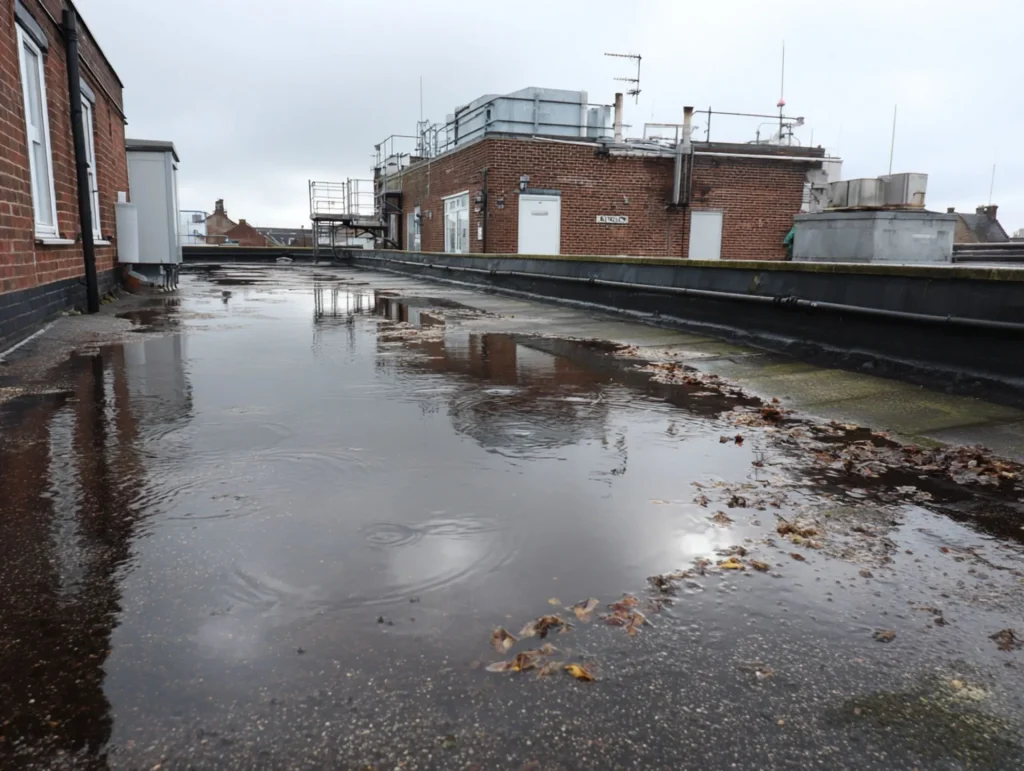
When rain hangs around for days, even a properly flat roof should still move water toward an outlet. If you are noticing puddles that linger long after the rain stops, that is called ponding water. It is common on flat roof extensions, garages, dormers, and small commercial roofs across Liverpool and the wider Merseyside area, especially with driving rain, high winds, coastal exposure, and older housing stock like Victorian terraces.
At Roofer and Builder, we carry out flat roof repair in Liverpool that homeowners can rely on, plus tile and slate roofing work. This guide explains why pooling happens, the early warning signs to watch for, and practical, safe drainage solutions that reduce repeat problems.
Understanding Flat Roof Water Pooling
Water pooling or ponding occurs when rainwater collects on a flat roof and does not drain away within 24 to 48 hours. Regardless of the name, a “flat” roof should always have a little slant to allow water to flow toward drains or gutters. During prolonged rain, particularly in regions like Merseyside where torrential downpours and wind-driven rain are prevalent, even a minor dip in the roof’s surface can cause water to pool rather than run off.
Regular inspections can help detect these small depressions early, before they cause leaks or necessitate major flat roof repairs.
The Main Causes of Water Pooling on Flat Roofs
Most ponding problems come down to drainage or the roof surface losing its shape over time. Common causes we see around Liverpool and Merseyside include:
- Poor drainage design: If the drainage system or outlets are too small, water won’t clear efficiently.
- Blocked gutters and outlets: Moss, leaves, and debris are serious problems in coastal and tree-lined areas such as Liverpool and the Wirral.
- Roof sagging: Over time, the roof deck can bow due to age, water damage, or poor-quality materials.
- Compromised roofing materials: Cracked felt or blistered membrane can trap water and weaken seams.
- After roof work or extensions: Changes in structure, such as added insulation or a roof replacement, can sometimes affect water flow if gradients aren’t adjusted correctly.
Spotting these causes early allows for targeted repairs rather than full roof replacement.
Why Standing Water on Flat Roofs Is a Serious Concern
While a small puddle might not seem alarming, prolonged ponding can cause several long-term problems:
- Roof leaks: Constant moisture stresses the roof covering, eventually finding its way into seams or flashing joints.
- Material degradation: Some roofing materials soften or crack with long exposure to standing water.
- Added load: Water is heavy. If a large area retains water, it increases stress on the roof structure, especially in older Liverpool terraces.
- Mould and damp: Moisture can migrate into ceiling voids and walls, leading to unhealthy indoor conditions.
Ignoring ponding can turn a simple roof repair into a full roof replacement down the line.
How to Prevent Water Pooling on Flat Roofs
Prevention is always cheaper and safer than emergency roof repairs in Merseyside. Here’s what helps:
- Keep gutters clean: Regularly remove moss and debris to maintain free drainage.
- Check roof outlets: Make sure outlets aren’t blocked by leaves or damaged flashing.
- Schedule seasonal inspections: Arrange a professional flat roof inspection before winter and after prolonged rainfall.
- Trim overhanging branches: This reduces leaves falling onto the roof.
- Ensure correct fall: A qualified roofer can check that the roof slope directs water properly toward drains.
If your roof frequently pools water despite doing these checks, it might need localised releveling or a new drainage solution.
Effective Solutions for Existing Water Pooling Issues
If water already pools on your roof, the solution depends on what’s causing it. At Roofer and Builder, we usually recommend one of the following:
- Localised levelling: Adding tapered insulation or resurfacing layers to redirect water flow.
- Installing new outlets or scuppers: These help water escape faster during heavy rain.
- Repairing damaged membranes: Replacing cracked felt or failed seams to stop leaks.
- Upgrading drainage systems: Professional drainage upgrades may be necessary if your property in Liverpool, Lancashire, or Cheshire experiences frequent flooding.
- Temporary make-safe repair: For emergencies, our team can attend quickly to seal leaks and prevent further water ingress until a full repair is scheduled.
These targeted solutions can extend the life of a flat roof without immediate replacement.
Adding Firring Pieces to Improve Fall and Prevent Ponding
If ponding keeps returning in the same areas, one of the most effective long-term fixes is to build a better fall into the roof structure using firring pieces (also called firrings or tapered timber strips). Firrings are fixed to the roof joists to create a gentle slope, so the deck naturally directs rainwater towards the gutter, outlet, or scupper rather than allowing it to sit in low spots.
This approach is especially useful on older extensions and garages where the roof has settled over time, or where the original build never had enough gradient. Once firrings are installed, the roof deck is re-boarded, and the waterproof system (felt, EPDM, GRP, or a liquid system) is renewed or reinstated to suit the specification.
By removing the cause of standing water rather than just treating the symptoms, firrings can reduce stress on seams and laps, lower the risk of leaks, and extend the service life of the flat roof, particularly in wet and windy areas like Liverpool and the wider Merseyside coastline.
Flat Roof Materials and How They Handle Ponding Water
Different roofing materials cope differently with standing water, but none benefit from it long-term. In Liverpool, we commonly see:
- Felt roofs: Traditional felt can blister and crack if water sits too long.
- EPDM rubber: Highly durable but prone to stretching if water accumulates excessively.
- GRP fibreglass: Strong against standing water but requires proper installation for long-term reliability.
- Liquid roofing systems: Offer seamless coverage, ideal for complex shapes or renewals.
When we inspect any flat roof repair in Liverpool, we always consider the material’s age and condition before advising the most cost-effective fix.
Seasonal Maintenance Tips for Flat Roofs
Liverpool’s wet, windy weather means a simple routine can save a lot of hassle:
- Spring: Clear winter debris, check for lifted edges, and look for early signs of leaking indoors.
- Summer: Heat can highlight blisters and cracks. Deal with them before the autumn rain.
- Autumn: Keep on top of leaf fall to protect the gutter and outlets.
- Winter: After storms, look for overflow marks, damp patches, and sudden roof leakage.
If you own or manage a small commercial unit, add a brief maintenance check after any period of prolonged rain. It is often the quickest way to catch problems early.
When to Call a Professional Roofer
It is time to bring in a roofer if any of the following apply:
- Water remains on the roof 48 hours after rainfall (in normal drying conditions).
- Ponding keeps returning in the same spots.
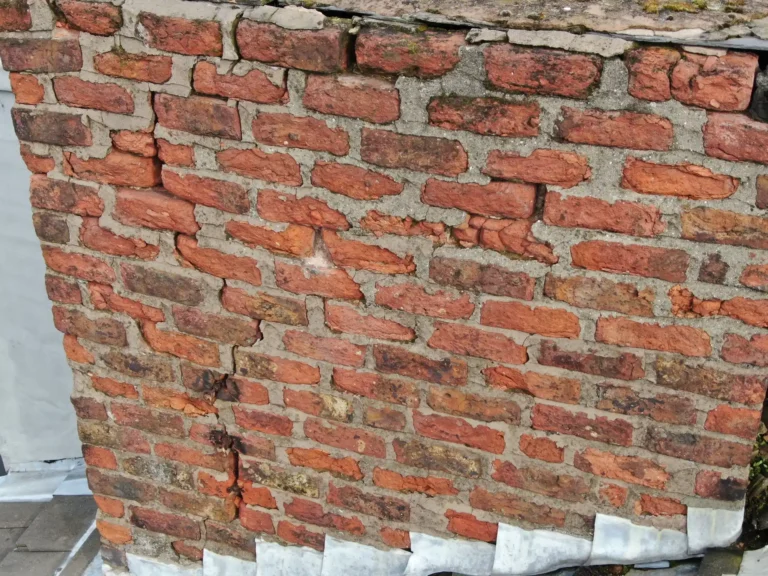
- You see cracks, lifted edges, soft patches, or failed seams.
- You notice internal staining, mouldy smells, or drips.
- The roof surface looks uneven or sagging.
- The gutter overflows, or the drainage system struggles during heavy rain.
Flat roofs can be hazardous to inspect without the right access and experience, especially in high winds. A professional assessment gives you a clear view of what is happening and what a sensible roof repair should involve. We maintain clear communication, provide transparent quotes, and keep every site tidy when we leave.
Please provide your postcode in Liverpool or Merseyside along with a description of the issue, and we will be happy to offer our advice on the next steps..
Keeping Your Flat Roof Dry and Safe
When water collects on a flat roof, it usually means that the drainage is blocked, the roof has lost its slope, or the waterproof layer is starting to break. The sooner you check it out, the better chance you have of preventing more water damage and keeping repairs small.
Tell us what you can see if you have a leak or storm damage, and we will tell you the safest way to repair it weather-tight.